The Southern California Steelhead Trout is a remarkable and resilient creature, but its survival hangs in the balance. Listed as a federally protected endangered species since 1997, and recently granted additional protection under the California Endangered Species Act (CESA), the species is at critically low levels, facing the risk of extinction within the next 25 to 50 years without significant intervention.
At the heart of the Southern Steelhead’s plight is the disruption of its fascinating life cycle and its reliance on connected waterways.
Steelhead are anadromous, meaning the adults live in the ocean but must return to freshwater rivers and creeks to spawn, much like salmon. This journey requires them to swim upstream, sometimes for many miles, to access cool, clean, gravel-bottomed pools where they lay eggs.
The Southern Steelhead life cycle includes several critical stages that depend entirely on the cool, clean freshwater of upstream, inland habitats:
- Egg: Laid in the winter, the red-orange eggs are buried under gravel for protection.
- Alevin/Fry: Once hatched, the young fish spend the Alevin and Fry stages in the cool, clean freshwater.
- Smolt: When they are ready to make the transition to saltwater, they enter the Smolt stage before migrating to the ocean.
This need for connected, high-quality freshwater habitat makes the restoration work done in the Santa Barbara and Ventura watersheds so vital.
Problem: Man-Made Barriers
For decades, human alterations to the watersheds—including roads, dams, and creek crossings—have created impassable barriers. It was once common practice for landowners and agencies to install low-flow concrete structures, often called “Arizona crossings,” to make vehicle and horse crossing easier. While convenient for people, these structures create vertical jumps and obstacles that prevent the endangered Southern Steelhead from swimming upstream to reproduce, effectively eliminating access to critical spawning grounds.
The Solution: Restoration and Partnership
Habitat restoration projects focused on removing these migration barriers are essential for the Southern Steelhead’s recovery. Our work at South Coast Habitat Restoration (SCHR) focuses on “putting things back where they belong” by restoring natural stream flow and providing fish-friendly passage.
Examples of our fish passage restoration efforts include:
- Wheeler Gorge Fish Passage Project: This multi-year effort involved removing four concrete creek crossings on North Fork Matilija and Bear creeks. The project restored the creek to a natural stream channel condition and installed two clear span vehicular bridges, successfully opening approximately 13 miles of upstream habitat.
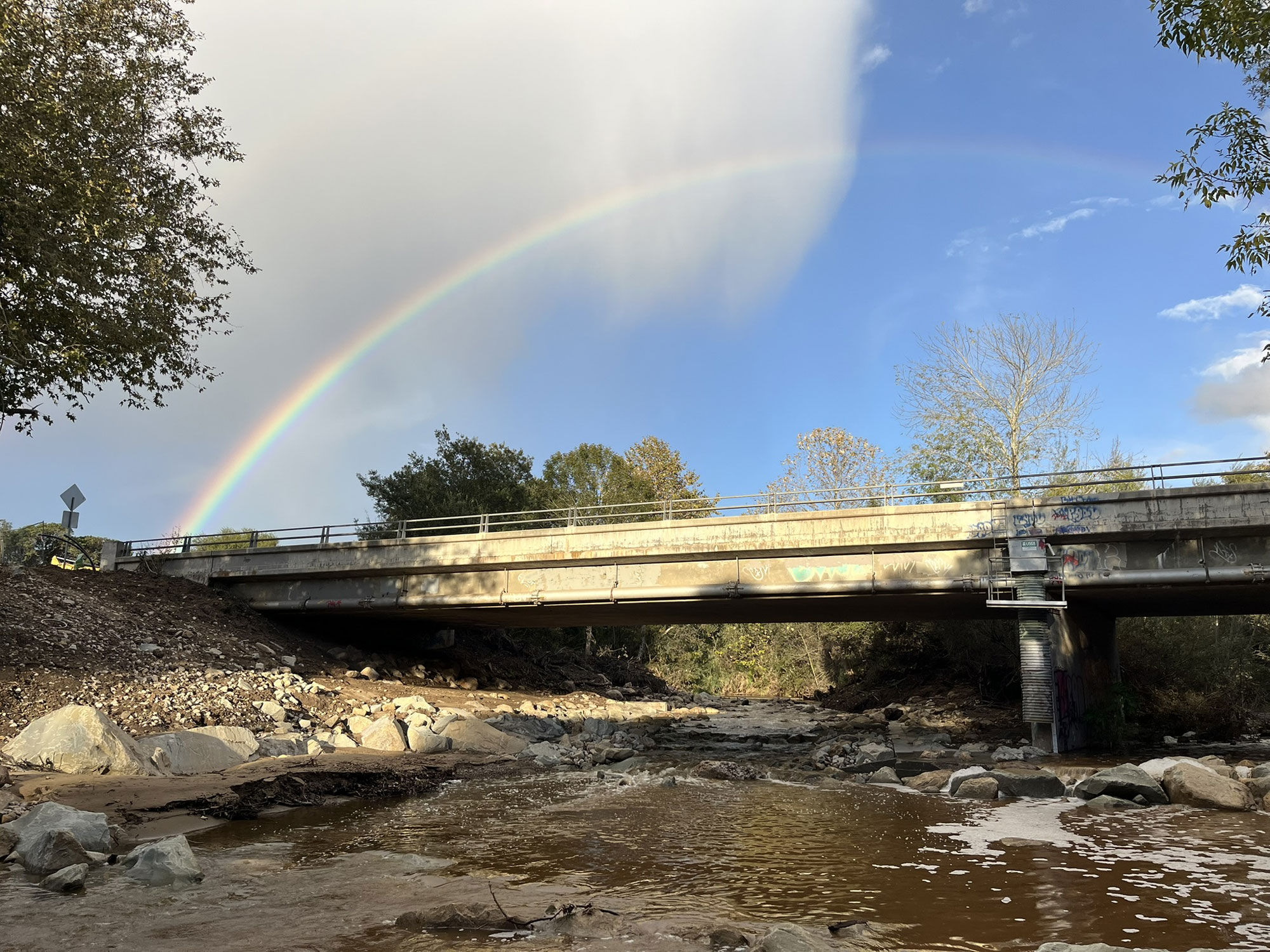
- Patterson Avenue Fish Passage Project: Along Maria Ygnacio Creek, we modified the underside of the Patterson Avenue bridge, removing a jump barrier that previously impeded Southern Steelhead.
- Davy Brown/Munch Creek Aquatic Organism Passage Project: This project removed three “Arizona creek crossings,” installing two vehicular bridges along Sunset Valley Road, and opening over three miles of stream habitat for migration.
By replacing these historical barriers with modern, fish-friendly crossings, we are restoring natural hydraulic conditions and giving the Southern Steelhead the access it needs to complete its life cycle and repopulate its historic habitats. This work is a testament to the power of positive partnerships with private property owners, local governments, tribes, and wildlife agencies.
The recovery of the Southern Steelhead is a barometer for the health of our entire watershed. Supporting efforts to clear the way for their migration ensures we are creating a more balanced world where our wildlife, wilderness, and waterways can thrive for current and future generations.
To learn more about the challenges facing Southern Steelhead Trout and how you can help, please visit our website at https://schabitatrestoration.org/ and explore our projects.